
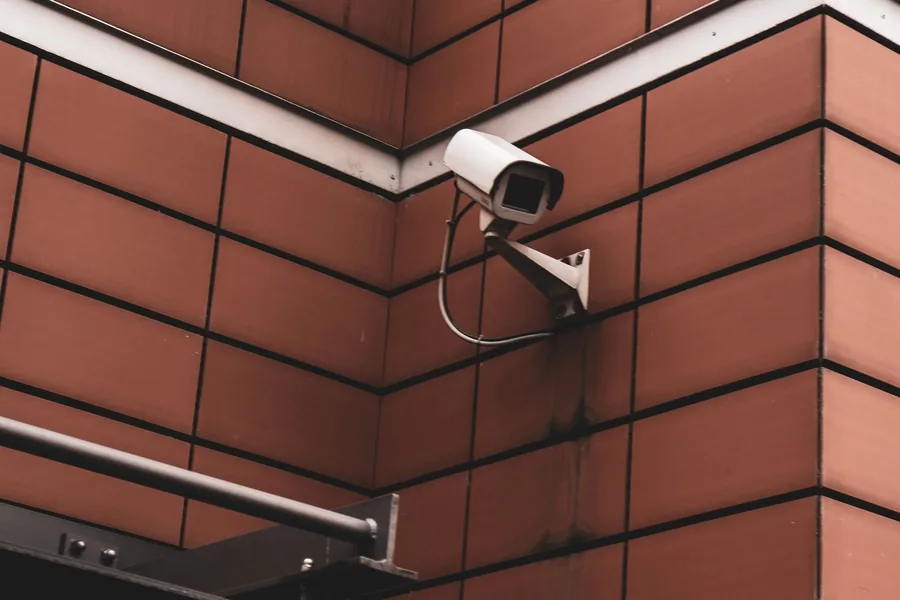
Video surveillance in Basel is worthwhile wherever you want to detect events, reconstruct them afterwards or check them remotely: at entrances, loading bays, car parks, warehouses or checkout areas. A good system, however, does not start with the camera model but with the question of what exactly should be recorded and why.
Wingsecurity plans, installs and supports video surveillance systems with Hanwha Vision cameras and recorders for businesses, properties and private clients in Basel and the region. Because we also operate a security service, we think about the system from the outset together with the question of who responds in the event of an alarm.
From planning to handover
It all starts with a site visit. We clarify which areas should be monitored, what image quality is needed (overview or identification), what the lighting conditions are like by day and by night, and where cables, network and recorders can be housed. The result is a camera plan with locations, viewing angles and a recording concept.
After installation, we set up recording, user permissions and remote access via the app, mask areas that must not be recorded and show you how to operate the system. On request, we also take care of maintenance, firmware updates and troubleshooting.
Hanwha Vision cameras
We rely on cameras and recorders from Hanwha Vision. Depending on the model, the systems offer AI-assisted detection of people and vehicles, good image quality in backlight and darkness, and the option of permanently masking private zones in the image. This can significantly reduce false alarms caused by animals, leaves or headlights.
- Indoor and outdoor cameras as dome, bullet or panoramic models
- Person and vehicle detection for targeted alarms instead of a flood of motion alerts
- Local recording on an on-site recorder, access via app with user permissions
- Privacy masking for areas that must not be recorded
- Combination with an alarm system and access control
Data protection and video surveillance in Switzerland
Anyone who films people in such a way that they can be identified is processing personal data — and the Federal Act on Data Protection (FADP) then applies. The Federal Data Protection and Information Commissioner (FDPIC) summarises the key principles for private individuals in its guidance on video surveillance by private individuals. In simple terms:
- As a rule, only your own property should be recorded — not the pavement, the street or the neighbouring property.
- Surveillance requires a justification, such as the protection of people or property, and must be proportionate.
- Recordings may only be stored for as long as is necessary for the purpose; the FDPIC generally cites 24 hours as a guideline.
- A clearly visible sign must draw attention to the cameras before anyone enters the monitored area.
- Screens and recordings must only be accessible to authorised persons.
Cameras in the workplace
Additional rules apply to areas where employees work: systems intended to monitor employees’ behaviour at the workplace are not permitted. Cameras that are necessary for security reasons, for example, must be positioned so that employees are recorded as little as possible (see FDPIC: video surveillance in the workplace).
We take these requirements into account when choosing camera locations, viewing angles and masking. This does not replace legal advice in individual cases — in sensitive situations, we recommend coordinating the planning with your legal adviser or data protection officer.
What you can prepare
For an initial assessment, it helps us to have photos or plans of the property, a description of the incidents or risks you want to cover, details of your existing network infrastructure and information on who should have access to the images in day-to-day operation.